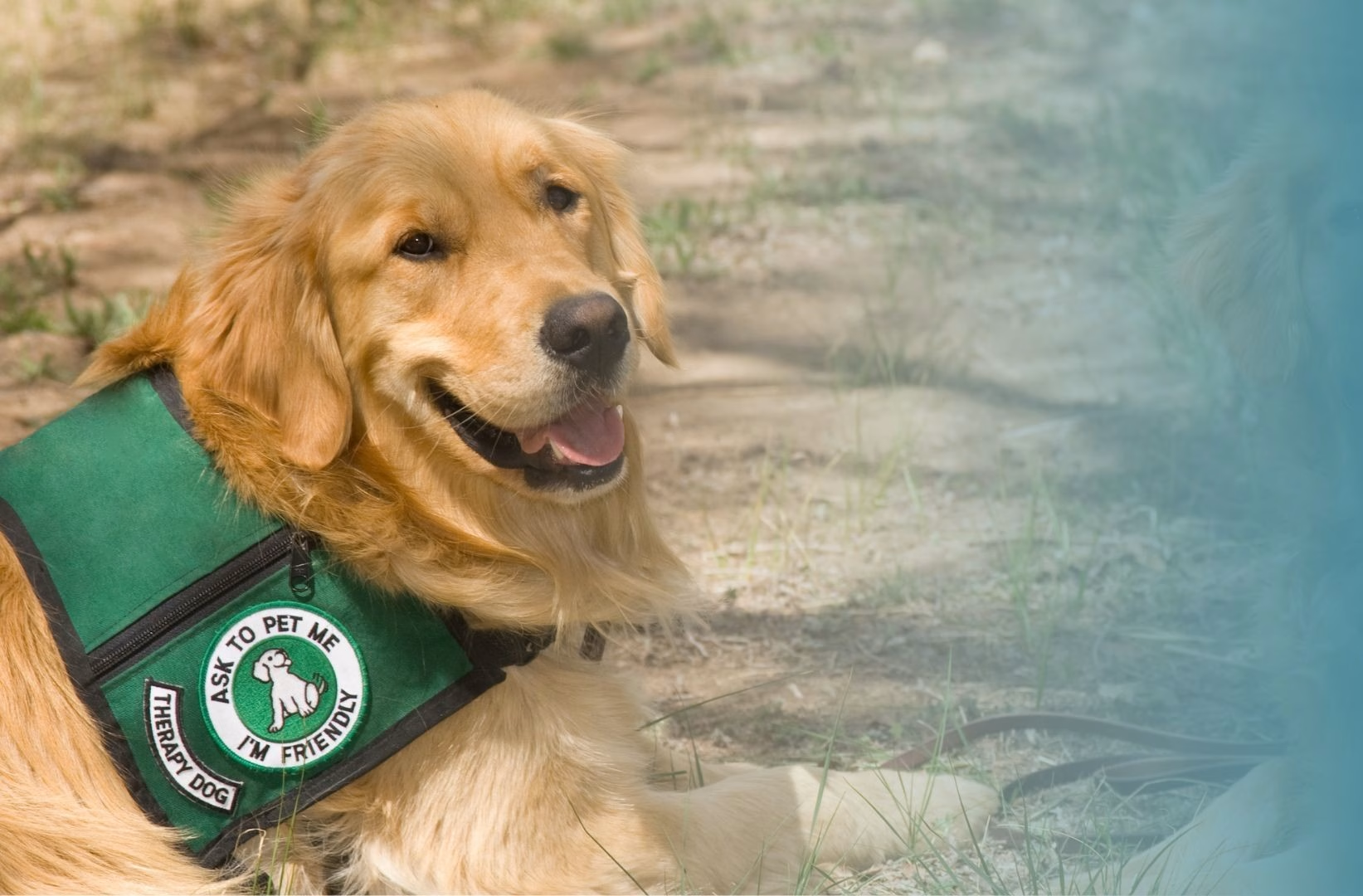


Starting in Fall 2026, Champlain’s Continuing Education department will launch a new AEC for Animal-Assisted Therapy. The program was developed at Cegep de Granby in French and is being offered for the first time in English at Champlain Saint-Lambert thanks to a partnership with Granby.
In the program, students who already have training in special care counselling, early childhood education, nursing, social work, or similar fields can gain an additional specialization in zootherapy.
Pedagogical Counsellor Samantha Morley presented the new program to Champlain’s Commission of Studies in December and explained that this training will be an additional tool in the kit of workers who are trained to do interventions with diverse clientele.
The AEC (Attestation d’études collégiales) will be offered part-time during evenings and weekends to attract students who are already working. During six courses (480 hours of instruction, students will learn to work with animals in a therapeutic environment.
There is currently no other English college offering this type of training and the market and demand for zootherapy in Quebec is growing.
“Having worked in settings that had therapy animal programs, I’ve witnessed the benefits first-hand and am excited to contribute to a program that helps train students to contribute to this field,” said Samantha Morley, Continiung Education Pedagogical Counsellor.
Students will have their therapy animal pre-screened and then gain hands-on experience in labs working directly with the animal.
“Animals offer a source of comfort for humans, and have been used for therapy purposes for a long time, but training programs are just beginning to be offered in this area. This program is valuable as students will learn not only clinical skills but also how to responsibly care for and communicate with their animal, ensuring animal well-being and a positive impact on the individuals they work with,” said Morley.
Over the course of the program, students will learn six main competencies:
• demonstrate ethical conduct
• evaluate the person’s condition with the aim of overall development or maintenance of abilities
• develop the potential of the animal partner
• meet the fundamental needs of the animal partner
• develop, implement and facilitate animal assisted therapeutical activities
• design and implement an integrated animal assisted therapy intervention or activity plan
“Students will learn to combine intervention skills with human-animal interactions, making them more versatile in the job market while helping meet society’s growing needs for mental health and wellbeing support,” said Continuing Education Director Mark Wallace.